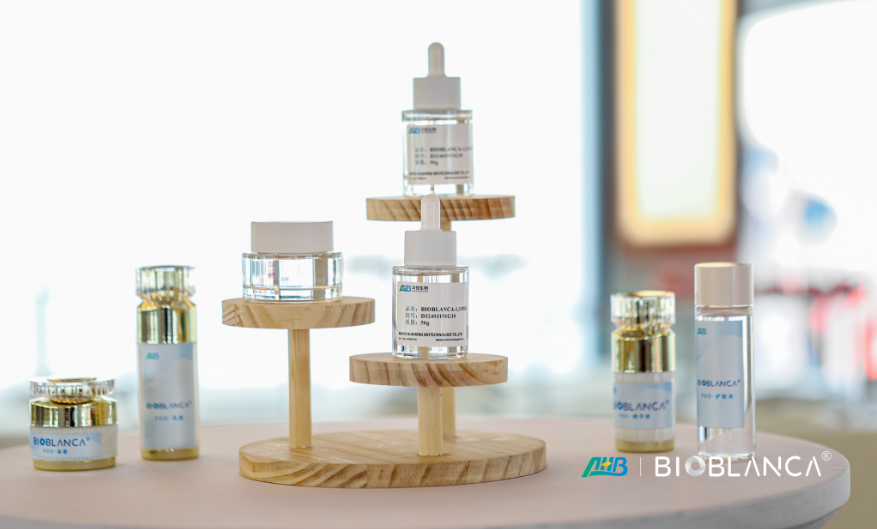








In today’s global "Clean Beauty" movement, every ingredient on the label is under the magnifying glass of "skincare nerds." Among various humectants, 1,3-Propanediol (1,3-PDO) has emerged as a standout, becoming a favorite for many luxury skincare brands.
However, for those with a compromised skin barrier or sensitive skin, the most pressing question remains: Is it irritating to the skin? Is it safe for long-term use?
1. Clearing the Confusion: Not All "Glycols" Are Created Equal
Many people feel hesitant when they hear the word "glycol," largely due to confusion between 1,2-Propylene Glycol and 1,3-Propanediol.
While their names sound similar, their structures and safety profiles are worlds apart:
1,2-Propylene Glycol: Primarily petroleum-derived. Due to its small molecular weight and high permeability, it can cause stinging, burning, or allergic reactions in some individuals when used in high concentrations.
1,3-Propanediol: Modern production (such as BIOBLANCA™) typically utilizes bio-fermentation. Because of its unique molecular arrangement, it exhibits exceptional skin affinity and biocompatibility.
2. A "Safe Harbor" for Sensitive Skin: Deep Dive FAQ
To address the most common concerns regarding safety and efficacy, we have compiled the following expert Q&A:
Q: Is 1,3-PDO safe for facial skin?
A: Absolutely. Clinical dermatological tests show that 1,3-PDO is significantly less irritating than its petroleum-based relative, 1,2-propylene glycol. It does not cause redness or burning and even provides a soothing effect. For sensitive skin products or eye contour care, 1,3-PDO is an ideal humectant and solvent, offering a moisturizing yet non-greasy feel while maintaining skin barrier health.
Q: Is 1,3-PDO a natural ingredient?
A: Yes. The 1,3-PDO used in modern cosmetics (like BIOBLANCA™) is typically bio-based. it is derived from renewable plant resources, such as non-GMO corn sugar, through advanced fermentation technology. This process is more eco-friendly than traditional petrochemical synthesis and often holds COSMOS or ECOCERT natural certifications.
Q: Is 1,3-PDO a preservative?
A: Technically, no; but it has synergistic antiseptic and antibacterial effects. 1,3-PDO optimizes the formulation environment by enhancing the antimicrobial efficacy of traditional preservatives (like Phenoxyethanol). This allows formulators to reduce the total amount of preservatives needed, thereby decreasing the potential risk of irritation for sensitive skin.
3. The Triple Role of 1,3-PDO in Sensitive Skin Formulations
Beyond being non-irritating, 1,3-PDO plays three critical roles in high-performance skincare:
Superior Hydration: Tests prove that 1,3-PDO has better hygroscopic (moisture-binding) properties than glycerin, but without the heavy, tacky after-feel. This ensures sensitive skin stays hydrated and refreshed.
Experiments have shown that Experiments have shown that 1,3-PDO has better hygroscopicity than 1,2-propanediol, and it does not have the heavy stickiness of glycerin, allowing sensitive skin to stay refreshed while being moisturized.
Excellent Solubilizing Properties: Many beneficial actives (such as Ceramides or soothing botanical extracts) are difficult to dissolve in water. 1,3-PDO efficiently solubilizes these ingredients without disrupting the skin barrier.
Sensory Enhancement: It effectively reduces the stickiness associated with high concentrations of glycerin, making the application process smoother and more pleasant.
Conclusion: Is it a safe choice for sensitive skin?
The answer is a resounding yes.
If you are looking for a moisturizing product that provides deep hydration without triggering redness or irritation, formulations containing 1,3-Propanediol are an excellent choice. High-purity, naturally certified 1,3-PDO—such as AHB BIOBLANCA™—not only protects your skin barrier but also aligns with modern green and sustainable consumption values.