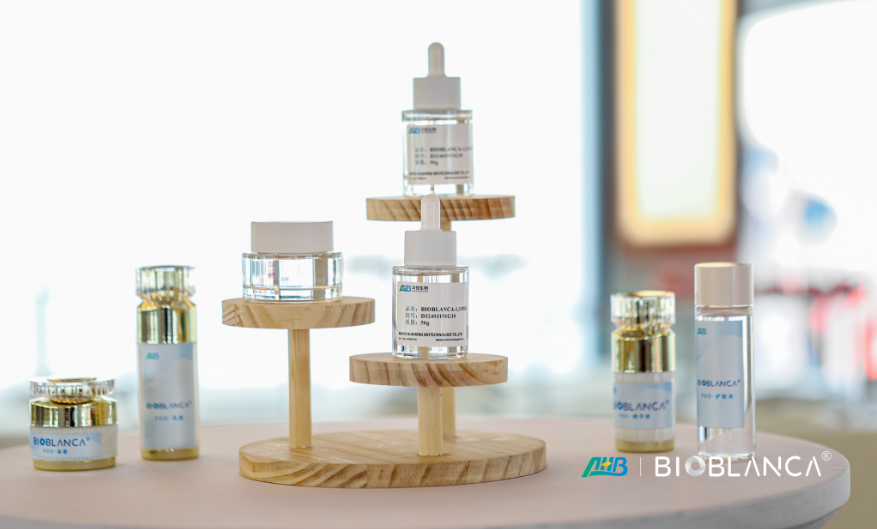








In the world of personal care and cosmetics, D-Panthenol is one of the few elite ingredients accepted by all skin types with decades of clinical proof. To help formulators and brands better understand this "multi-tasking" hero, we have compiled the most frequently asked questions about D-Panthenol, featuring the innovative BIOPURENOL™ technology from AHB Global.
1. What is D-Panthenol and how does it work?
D-Panthenol, also known as Dexpanthanol or Pro-Vitamin B5, is the precursor to Vitamin B5.
The Mechanism: Once applied, it is rapidly absorbed by the skin or hair and converted into Pantothenic Acid (Vitamin B5).
The Role: It is a vital component of Coenzyme A, which acts as the "engine" for cellular energy metabolism and skin barrier repair.
2. What are the key benefits of D-Panthenol for skin?
According to dermatological research, D-Panthenol offers far more than just surface hydration:
Moisturizing and Skin Barrier Repair: Enhances the skin's ability to retain moisture, replenishes the stratum corneum's moisture reserves, and increases skin hydration; improves skin barrier function and reduces transepidermal water loss (TEWL).
Soothing and Anti-inflammatory: Inhibits the release of inflammatory factors, thereby reducing inflammation and soothing the skin.
Wound Healing: Promotes cell migration and proliferation, significantly shortening the wound repair cycle.
3. Is D-Panthenol effective for hair care?
Absolutely. It is a staple in high-end hair care formulations for several reasons:
Long-lasting Hydration: Unlike surfactants that wash away, it penetrates the hair shaft to prevent dryness.
Enhanced Elasticity: By improving the hair structure, it reduces breakage caused by mechanical combing and styling.
Radiant Shine: It forms a smooth, thin film on the hair surface, enhancing natural light reflection and luster.
4. Why should you choose Bio-based D-Panthenol?
As the "Clean Beauty" movement gains momentum, the origin of ingredients has become critical. While traditional D-Panthenol is often derived from petroleum-based chemical synthesis, AHB BIOPURENOL™ D-Panthenol utilizes a revolutionary approach:
Green Bio-fermentation: Produced from non-GMO corn starch.
Lower Carbon Footprint: The production process significantly reduces CO₂ emissions compared to traditional chemical methods.
Purity & Safety: The biosynthetic process minimizes irritating impurities often found in traditional chemical reactions.
5. What is the difference between D-Panthenol and Pantothenic Acid?
This is a common question for developers:
Pantothenic Acid: Highly unstable and difficult to incorporate into cosmetic formulas.
D-Panthenol: The stable form of Vitamin B5. It is easy to store and boasts excellent skin permeability, making it the most effective "delivery vehicle" for Vitamin B5 into the skin cells.
6. How to maximize the efficacy of BIOPURENOL™ in formulations?
AHB BIOPURENOL™ offers exceptional compatibility for various applications:
Water solubility: Easily soluble in water, suitable for various skin care and hair care products such as lotions, serums, creams, shampoos, and conditioners.
Stability: Performs best within a pH range of 4.0 to 7.0.
Synergy: When combined with Hyaluronic Acid (HA) or Centella Asiatica, it creates a powerful "multiplier effect" for skin barrier repair.
Conclusion
D-Panthenol is a classic, but AHB Global has revitalized it through BIOPURENOL™ technology. If you are looking for an ingredient that meets both high-performance standards and sustainability goals, our D-Panthenol is your ideal choice.
Looking for technical specifications? Visit the AHB BIOPURENOL™ D-Panthenol Product to access TDS, COA, and request samples.